



Most of us know coffee goes well with breakfast or a square of chocolate after dinner. But there's a lot more going on in that cup than we give it credit for. Coffee carries real flavour, and once you understand a little of how it works, you can start making combinations that genuinely surprise you.
This guide isn't about becoming a food critic. It's about enjoying what's already in your kitchen a little more.
Every coffee has a flavour personality
Some coffees are bright and fruity. Some are rich and chocolatey. Others are nutty, floral or almost earthy. These flavours come from where the coffee was grown, how it was processed and how it was roasted. You don't need to memorise any of that. What helps is simply tasting your coffee and asking one question: what does this remind me of?
Once you can do that, matching coffee with food becomes intuitive.
Two ways to pair: complement or contrast
Complementing means bringing together flavours that are similar, which makes both taste richer. Contrasting means pairing flavours that are different, which makes both taste more interesting. Neither approach is wrong. It just depends on the experience you're after.
Here's how that plays out with real food.
Chocolate and nutty coffees
The easiest place to start, because they're the most forgiving. A coffee with deep chocolate or roasted nut notes pairs beautifully with anything that shares those qualities. A buttery croissant. A pecan brownie. A slice of banana loaf. The flavours speak the same language, so they lift each other instead of competing.
If you lean towards a darker, bolder roast, try it alongside salted caramel or a mild aged cheese. The contrast between the bitterness of the coffee and the creaminess of the food is one of the most satisfying combinations you can have at home.
Fruity and bright coffees
These work best when you either lean into the fruit or balance it with something rich. A lighter roast with berry or citrus notes is stunning with a slice of lemon tart, a fresh fruit scone, or a bowl of Greek yoghurt with honey.
Want contrast instead? Pair it with something buttery and plain, like shortbread or a simple vanilla sponge. The richness of the food softens the brightness of the coffee and rounds the whole experience out.
Floral coffees
Delicate, with a character closer to tea than to a dark roast. These pair wonderfully with things that are light and not too sweet. Almond biscotti. A mild soft cheese on a plain cracker. A delicate honey cake. Strong flavours will overwhelm these coffees, so keep the food gentle and let the coffee do the talking.
Earthy and spiced coffees
Bold enough to stand alongside stronger flavours. These are the coffees to reach for when you're eating something savoury and rich. They work exceptionally well with dark rye bread, walnut cake, aged cheddar, or spiced foods like cardamom pastries and ginger biscuits. There's a reason coffee features so heavily in Middle Eastern food traditions. Its bitterness and depth cut through richness and cleanse the palate beautifully.
The pairing that surprises everyone: coffee and cheese
It sounds unusual, but the pairing has a long history in Scandinavian and European food cultures. A mild, creamy brie alongside a smooth, balanced medium roast is genuinely delicious. The fat in the cheese softens any bitterness in the coffee, and the result feels luxurious without requiring any effort.
One rule worth remembering
Sweet foods make coffee taste more bitter. Salty foods make coffee taste smoother. Fatty foods make coffee feel rounder and softer. Know that, and you can start making small adjustments that have a big impact.
Where to start with Wolff blends
Each of our blends has a distinct character, which makes pairing feel intuitive rather than complicated.
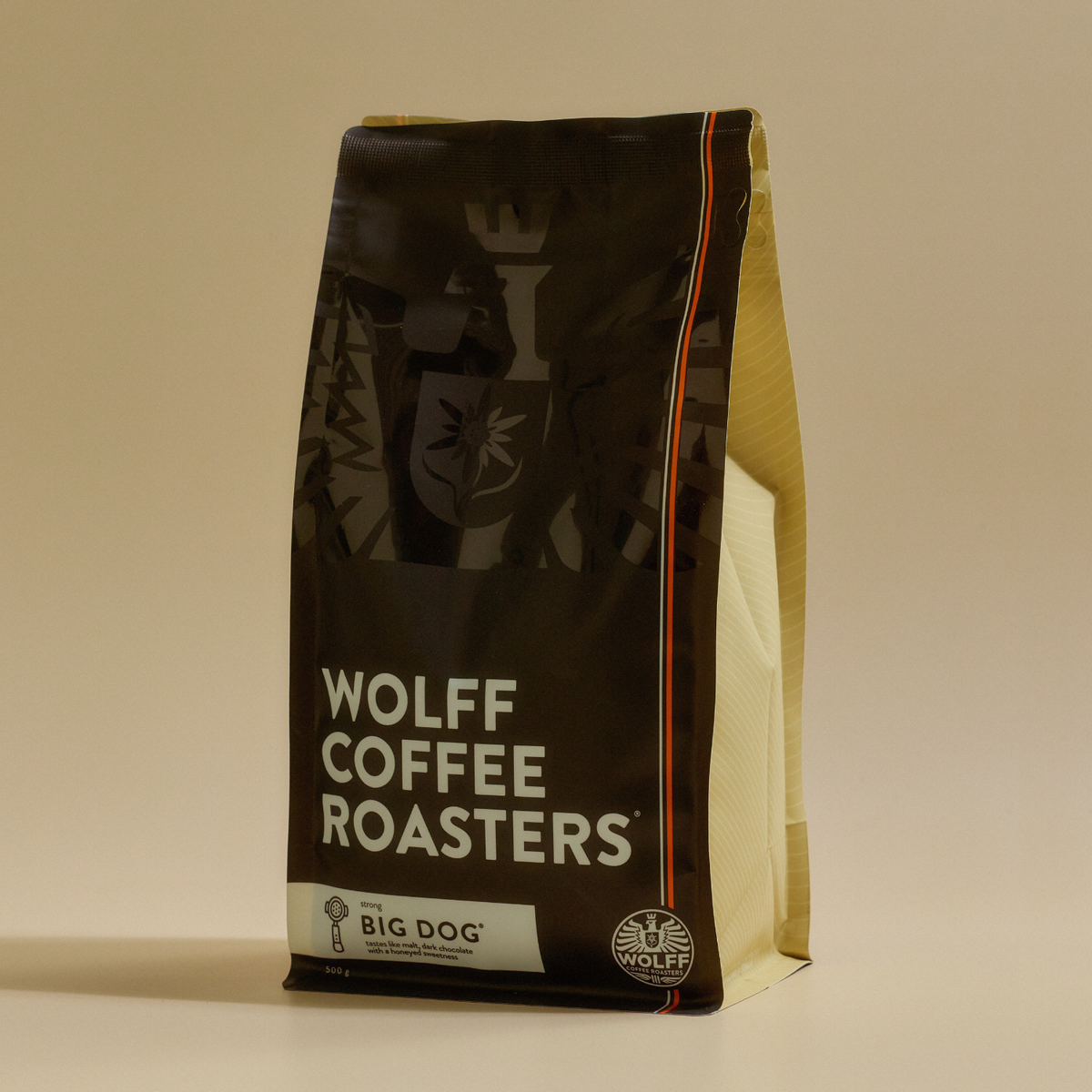
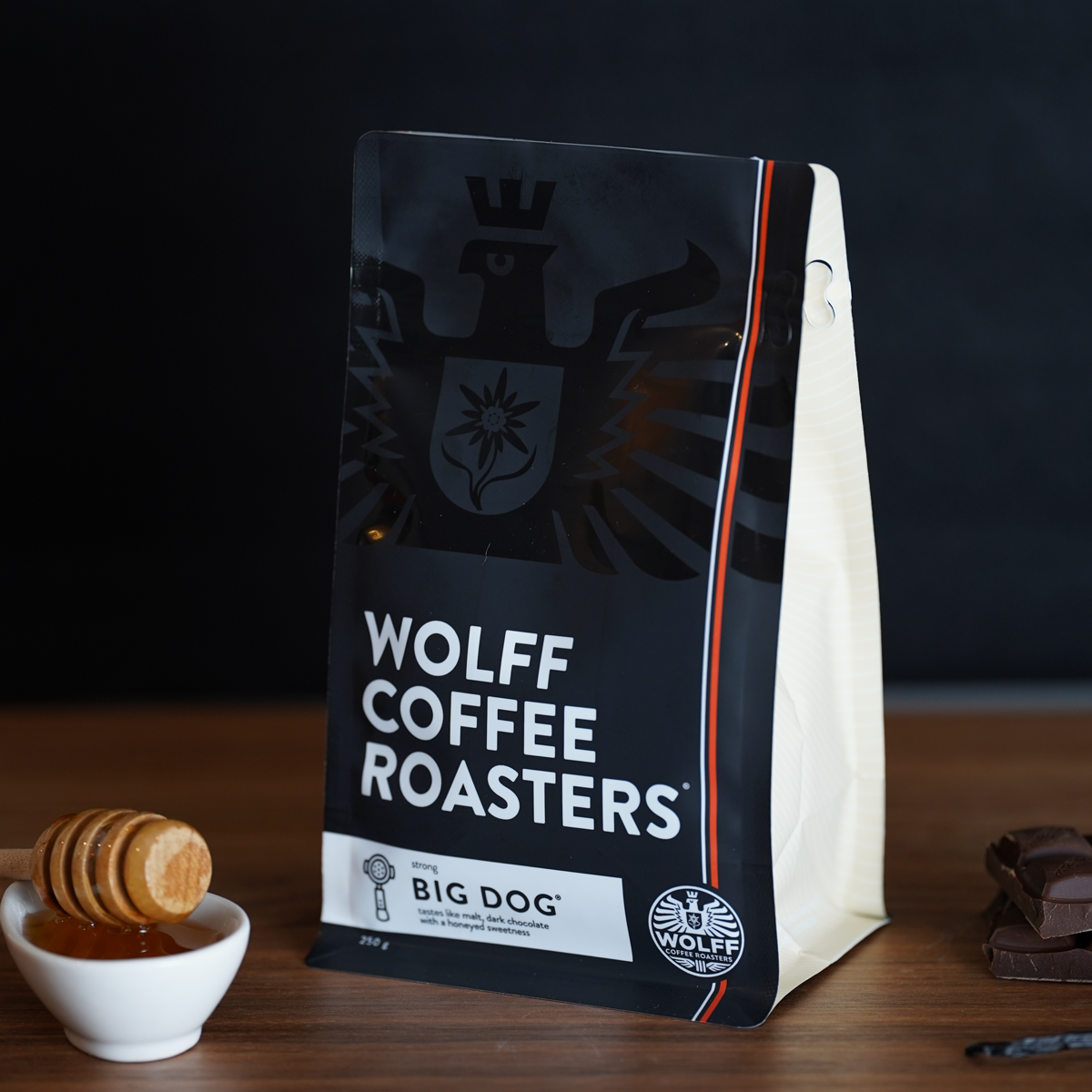
Big Dog is our strong, reliable everyday blend. Full of body, it suits everything from a slice of toast to a chocolate chip muffin.
Lil Red is sweet, balanced and easy to drink, which makes it an ideal match for lighter bites like fruit toast or a simple butter cake.
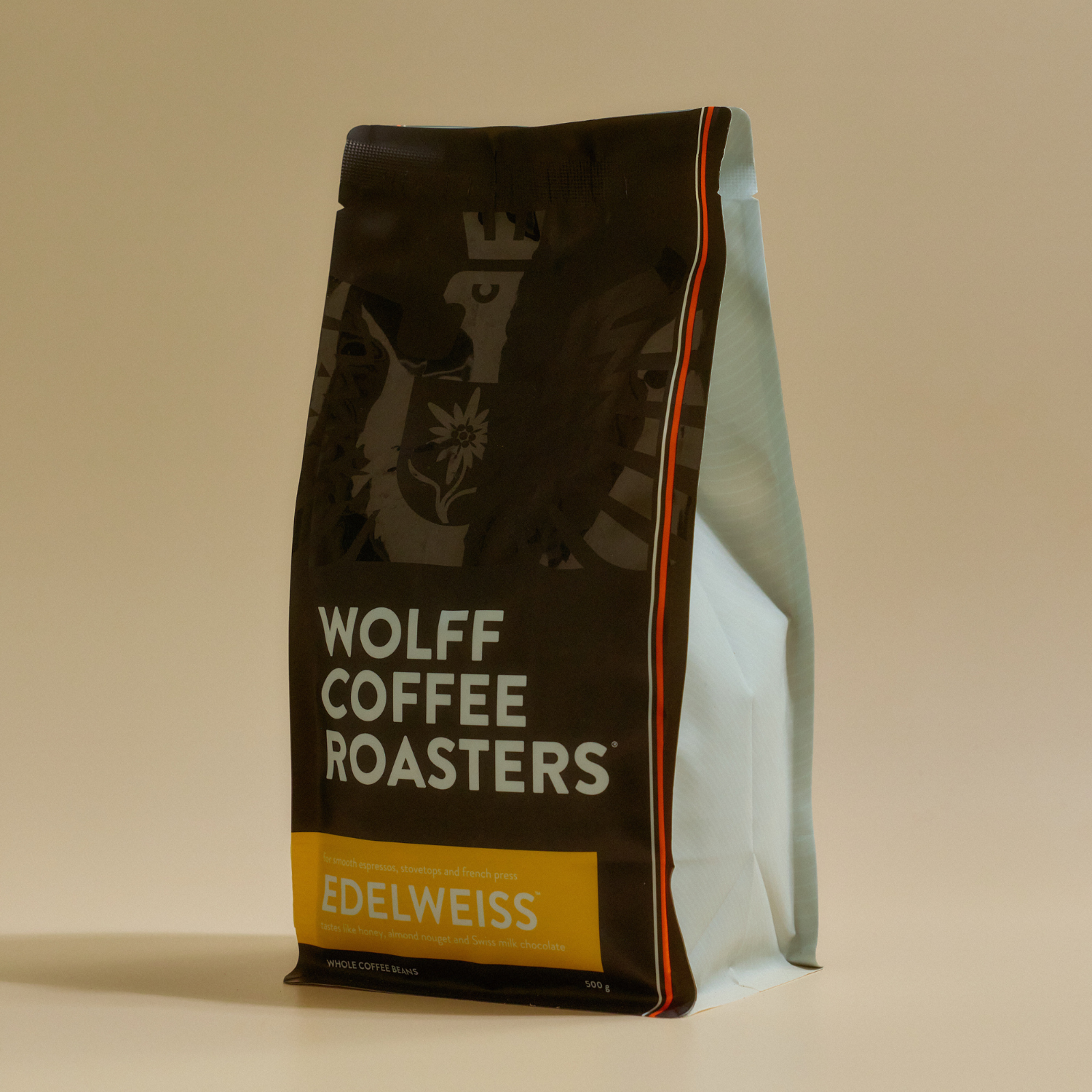
Edelweiss is our most refined blend, with notes of honey, almond nougat and Swiss milk chocolate. It rewards pairing with something equally considered, like quality dark chocolate or a fine almond cake.
DRK is bold and direct. It holds its own alongside stronger, richer foods like brownies, aged cheese, or a proper cooked breakfast.
Start noticing
Don't overthink any of this. The goal is curiosity, not perfection. Start with whatever coffee you already have and whatever food is in the kitchen. Take a sip, take a bite, take another sip. Notice what changes. Notice what opens up. Notice whether the combination makes both things better or flattens them out.
That noticing is all pairing really is. It's paying attention. And the more you do it, the more you realise coffee isn't just something you drink before the day starts. It belongs on the table, in the meal, in the moment.
So this week, run one experiment. One coffee, one food, three sips. Then tell the Wolff Pack what you found.
1 comment
Greetings everybody. I decided to give a URL to an excellent resource where you can get a lot of
banknotes. Provided that someone is curious, so go to the resource.
World Cup 2026 Betting & Odds
Desiree
Leave a comment
This site is protected by hCaptcha and the hCaptcha Privacy Policy and Terms of Service apply.